Banner Banter: The Brilliant Brits Turning Festival Signs Into High Art
The Cardboard Renaissance
Somewhere in a Manchester bedsit, twenty-six-year-old graphic designer Lucy Thompson is hunched over her kitchen table at 2 AM, meticulously applying glitter to a six-foot banner that reads "ARCTIC MONKEYS: PLEASE ADOPT ME." Tomorrow, she'll join 80,000 other fans at Reading Festival, but Lucy's real mission isn't just to see her favourite band – it's to create the perfect sign.
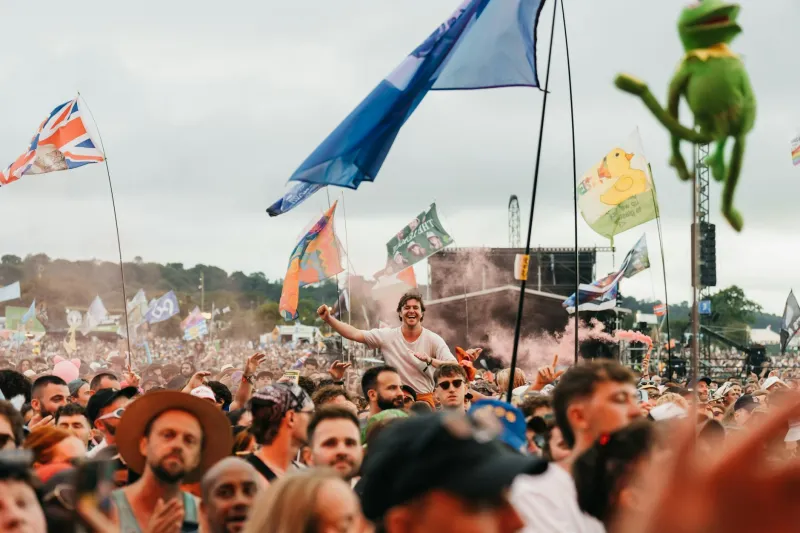
 Photo: Reading Festival, via c8.alamy.com
"People think we're mad, spending twelve hours making something that'll get soggy and binned by Sunday," Lucy laughs, stepping back to admire her handiwork. "But they don't understand. The sign isn't just decoration – it's performance art, it's comedy, it's connection. It's how you become part of the show rather than just watching it."
Lucy represents a uniquely British phenomenon that's exploded across the festival circuit: the dedicated sign-maker. These creative souls treat every gig as an opportunity for artistic expression, armed with nothing more than cardboard, markers, and boundless imagination.
The Science of Festival Signage
What makes a great festival sign? According to veteran sign-maker Dave "Banner" Williams, who's been crafting crowd-pleasers for over a decade, it's a delicate balance of timing, wit, and visibility.
"You've got about three seconds to grab attention," Williams explains, showing off his latest creation: a LED-illuminated sign reading "OASIS REUNION OR RIOT." "The best signs work on multiple levels – they're funny from far away, clever up close, and memorable enough to go viral."
Williams has achieved minor internet fame for his creations, including the legendary "DAVE FROM ACCOUNTS NEEDS A WEE" sign that photobombed Coldplay's Glastonbury headline set and generated over 2 million social media impressions. The sign even earned a mention from Chris Martin mid-performance.
"That's when you know you've made it," Williams grins. "When the headliner acknowledges your cardboard masterpiece in front of 100,000 people."
The Underground Network
What started as individual creativity has evolved into a sophisticated community. Facebook groups like "Festival Sign Appreciation Society" boast over 45,000 members who share designs, offer construction tips, and celebrate viral moments. WhatsApp groups coordinate sign themes for specific gigs, whilst Instagram accounts document the season's best efforts.
The community even has its own hierarchy. "Legends" like Williams and Thompson are approached by newcomers seeking advice on everything from weather-resistant materials to optimal font sizes. Some experienced sign-makers have started offering commission services, charging up to £150 for elaborate custom banners.
"It's become a proper subculture," observes Dr. Sarah Mitchell, who studies festival behaviour at Leeds University. "These aren't just random punters with signs – they're a creative collective with their own aesthetic standards, technical knowledge, and social dynamics."
Viral Victories
The holy grail for any festival sign-maker is achieving viral status – that magical moment when their creation transcends the crowd and becomes internet legend. Recent viral successes include the "LEWIS CAPALDI'S EMOTIONAL SUPPORT BANNER" that appeared at his final tour shows, and the elaborate "HARRY STYLES: WILL YOU BE MY WATERMELON SUGAR DADDY?" sign that earned its creator a backstage meet-and-greet.
But perhaps the most legendary viral moment belongs to nineteen-year-old student Emma Clarke, whose "ED SHEERAN: PLAY WONDERWALL" sign became an international meme after appearing at his Wembley show. The deliberately absurd request (Wonderwall being an Oasis song) captured the internet's imagination and spawned countless variations.
"I just wanted to make people laugh," Clarke explains. "I never expected it to become this massive thing. But that's the beauty of festival signs – they're democratic. Anyone can create something that resonates with millions."
The Art of the Craft
Creating the perfect festival sign requires surprising technical skill. Weather resistance is crucial – British festivals being notorious for sudden downpours. Many sign-makers have developed sophisticated lamination techniques using shower curtains and gaffer tape. Others experiment with LED strips for night visibility or incorporate moving parts for maximum impact.
Materials matter too. Cardboard remains the classic choice for its lightweight properties and ease of decoration, but innovators are exploring alternatives. Foam board offers better durability, whilst fabric banners can be rolled up for transport. Some creators use corrugated plastic for multi-festival durability.
"There's genuine craft involved," insists art teacher turned sign-maker Rebecca Jones. "Typography, colour theory, composition – all the principles of graphic design apply. The only difference is your canvas might end up in a puddle."
Beyond the Laughs
Whilst humour dominates festival signage, many creators use their platforms for deeper messaging. Political statements, charity promotions, and social causes regularly appear alongside comedy banners. During Glastonbury 2023, climate change messages were particularly prominent, with elaborate signs highlighting environmental issues.
Some sign-makers have even launched careers through their festival creativity. Marketing executive Tom Harper credits his viral Latitude Festival banner with landing his current job after his employer spotted his work trending on Twitter.
"Festival signs are basically guerrilla marketing for your personality," Harper explains. "They demonstrate creativity, humour, and the ability to capture attention – skills that translate directly to professional contexts."
The Technology Revolution
Traditional cardboard and marker pens are being supplemented by digital innovations. QR codes linking to playlists or social media profiles are increasingly common, whilst some creators incorporate smartphone-triggered light displays or sound effects.
Augmented reality is the next frontier. Several sign-makers are experimenting with AR triggers that overlay digital content onto physical banners, visible through smartphone cameras. These hybrid creations blur the line between physical and digital art.
"We're witnessing the evolution of an art form in real time," observes digital culture researcher Dr. James Morton. "Festival signs represent grassroots creativity meeting cutting-edge technology in uniquely British fashion."
The Future of Festival Expression
As festivals continue growing and evolving, so does the sign-making community. Some venues now host official sign-making workshops, whilst others have created designated "sign zones" with optimal visibility for creators. Festival photographers increasingly scout for the best banners, understanding their social media value.
The community is also becoming more inclusive, with groups specifically supporting first-time sign-makers and those from underrepresented backgrounds. Mentorship programmes pair experienced creators with newcomers, ensuring the craft's knowledge base continues expanding.
"Festival signs represent something beautiful about British culture," reflects Williams, preparing his latest masterpiece for the upcoming festival season. "We take ourselves seriously enough to invest real effort, but not so seriously that we can't laugh at ourselves. It's creativity for creativity's sake, and that's increasingly rare in our world."
As summer approaches and festival season beckons, thousands of Brits are already hunched over kitchen tables, crafting their contributions to this uniquely British art form. Armed with cardboard, creativity, and boundless enthusiasm, they're ready to turn every gig into a gallery, every crowd into a canvas, and every festival into a celebration of grassroots artistic expression.
In a digital age where everything feels temporary, there's something wonderfully authentic about spending hours creating art designed to last just one perfect weekend. That's the magic of Britain's festival sign revolution – it's not about permanence, it's about pure, joyful creativity in the moment.