When the Fourth Wall Falls: Inside Britain's Theatre-Club Hybrid Revolution
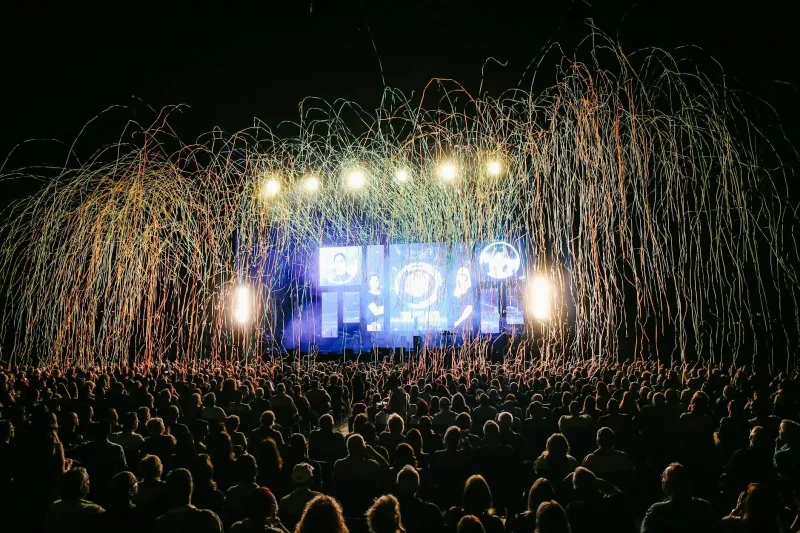
The Night the Audience Disappeared
It's 11:47 PM in a converted warehouse somewhere in East London, and Sarah Chen is frantically searching for clues whilst dodging strobe lights and bass drops that could wake the dead. She's not lost – she's exactly where she wants to be, deep in the throes of "Murder on the Dancefloor," one of Britain's most talked-about immersive theatre experiences that's been selling out faster than Glastonbury tickets.
"Traditional clubbing felt a bit... passive," Sarah explains during a brief intermission, her Victorian governess costume slightly dishevelled from an hour of detective work and dancing. "Here, I'm not just watching the story unfold – I am the story."
Sarah's sentiment echoes across a growing movement that's reshaping Britain's entertainment landscape. From the gothic corridors of Edinburgh's underground venues to Birmingham's repurposed industrial spaces, immersive theatre nights are pulling punters away from conventional clubs and into experiences where the line between performer and audience doesn't just blur – it completely vanishes.
More Than Just Dress-Up
Tom Ashworth, creative director of Phantom Collective – the minds behind some of Britain's most ambitious immersive experiences – reckons the appeal goes deeper than fancy costumes and elaborate sets. "People are craving authentic connection in an increasingly digital world," he explains from his studio in Manchester's Northern Quarter. "When you're solving a mystery alongside strangers whilst a DJ spins dark ambient techno, you're creating genuine shared memories."
Phantom Collective's latest production, "The Séance Sessions," transforms participants into Victorian spiritualists attempting to contact the dead through a combination of traditional séance rituals and cutting-edge electronic music. The three-hour experience has been running monthly sell-outs across six cities, with waiting lists stretching into 2025.
But it's not just independent collectives driving this revolution. Major venues are taking notice, with established theatres like London's Battersea Arts Centre and Leeds' West Yorkshire Playhouse launching dedicated immersive nightlife programmes.
The Psychology of Participation
Dr. Rebecca Martinez, a cultural anthropologist at King's College London who's been studying Britain's evolving nightlife patterns, believes the immersive theatre boom reflects a fundamental shift in how young Britons approach entertainment.
"We're seeing the Netflix generation rejecting passive consumption," she notes. "They want agency, they want to influence outcomes, and they want experiences that can't be replicated through a screen."
The numbers back her up. According to recent industry data, immersive entertainment experiences have grown by 340% across the UK since 2020, with the average participant attending 4.2 events per year – significantly higher than traditional theatre attendance rates.
Behind the Scenes Magic
Creating these experiences requires a unique blend of theatrical production, event management, and nightlife know-how. Emma Rodriguez, a performer-director who's worked on productions from Bristol to Glasgow, describes the challenge of maintaining narrative coherence whilst accommodating the unpredictable energy of a night out.
"You've got to be part actor, part DJ, part therapist," she laughs. "One minute you're delivering crucial plot exposition, the next you're helping someone who's had one too many proseccos find the loo without breaking character."
The technical demands are equally complex. Sound designers must create audio landscapes that support both intimate dialogue and dancefloor moments, whilst lighting crews work with directors to ensure crucial story beats remain visible even when the strobes are going mental.
Regional Flavours
Whilst London dominates headlines, some of Britain's most innovative immersive experiences are emerging from unexpected corners. Liverpool's "Cavern Mysteries" combines the city's musical heritage with interactive storytelling, whilst Newcastle's "Geordie Gothic" series has been packing out venues across the North East with horror-themed dance experiences.
In Scotland, Edinburgh's "Midnight Parliament" transforms participants into 18th-century politicians debating in atmospheric underground chambers, complete with period-appropriate refreshments and a soundtrack that seamlessly blends baroque compositions with contemporary electronic music.
The Community Factor
Perhaps most importantly, these experiences are fostering genuine communities. Regular attendees speak of forming lasting friendships through shared adventures, with many productions maintaining active social media groups where participants continue character interactions between events.
"It's like having a secret society," explains James Wong, a software developer from Birmingham who's attended over 20 immersive events across the Midlands. "You develop these inside jokes, these shared references that only people who've been through the experience understand."
Looking Forward
As 2025 approaches, the immersive theatre scene shows no signs of slowing down. New productions are experimenting with augmented reality elements, whilst others are exploring how artificial intelligence might create truly personalised narrative experiences.
For punters like Sarah, who's now planning her sixth immersive theatre night of the year, the appeal remains beautifully simple: "When did you last leave a club feeling like you'd been on an adventure? When did you last go dancing and come home with a story that wasn't just about the music or the drinks, but about what you actually did?"
In a world where experiences increasingly feel manufactured and predictable, Britain's immersive theatre revolution offers something genuinely rare: the thrill of not knowing what happens next, and the power to help write the ending yourself.