Threads of Glory: The Fashion Fanatics Crafting Britain's Festival Fantasy
The Revolution Will Be Bedazzled
Whilst the world obsesses over festival lineups and ticket prices, there's an entire underground movement that's been quietly revolutionising British festival culture from the inside out. These aren't your average punters throwing on last year's band tee and hoping for the best. These are the fashion fanatics, the style warriors, the creative obsessives who've turned festival dressing into an art form that rivals anything you'd see on the catwalks of London Fashion Week.
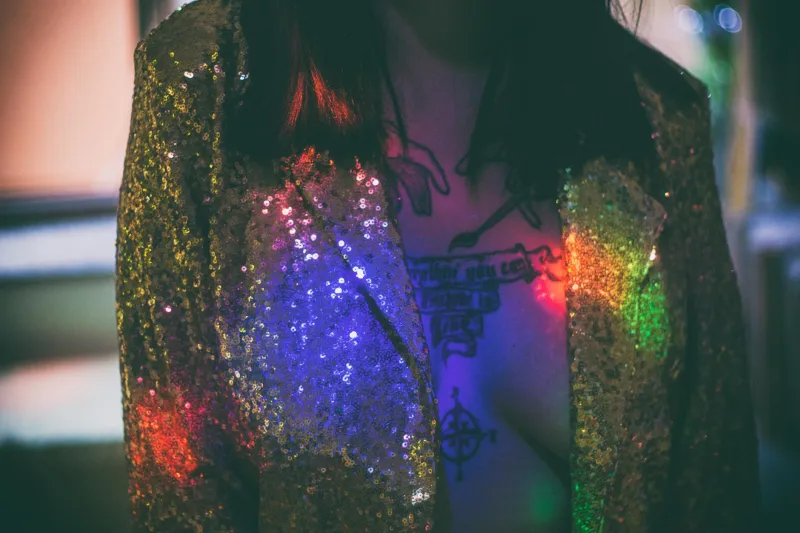
Meet Sarah Jenkins, a 28-year-old marketing exec from Brighton who spends eleven months of the year preparing for festival season. Her spare bedroom looks like a cross between a costume department and a craft shop explosion. "People think I'm mad," she laughs, holding up a hand-sewn cape covered in over 3,000 individual sequins. "But when you see someone's face light up when they spot your outfit across a muddy field at Glastonbury, you know it's worth every blister from the glue gun."
From Wellies to Wearable Art
The evolution of British festival fashion tells the story of our changing relationship with self-expression. Where once festival-goers prioritised practicality over pizzazz, today's scene is dominated by individuals who view each event as their personal Met Gala. The muddy wellington boot hasn't disappeared entirely, but it's now more likely to be spray-painted gold and adorned with LED strips than simply functional footwear.
"Festival fashion used to be about survival," explains Marcus Thompson, a veteran of the Reading and Leeds circuit who's been documenting style evolution since the early 2000s. "Now it's about transformation. People aren't just attending festivals; they're becoming their most exaggerated, creative selves."
This shift has created an entire ecosystem of preparation rituals that would make a Broadway costume designer weep with envy. Festival fashion enthusiasts plan their looks months in advance, scouring charity shops for base materials, watching YouTube tutorials on everything from face jewel application to LED wire integration, and building elaborate mood boards that rival any professional stylist's portfolio.
The Charity Shop Commandos
In the backstreets of Britain's charity shops, a different kind of treasure hunt is taking place. These fashion alchemists have developed an almost supernatural ability to spot potential in the most unlikely garments. A 1980s bridesmaid dress becomes the foundation for a ethereal woodland fairy costume. A discarded blazer transforms into a statement jacket with the addition of holographic fabric and neon trim.
"I've got relationships with charity shop workers across three counties," admits Jamie Patterson, whose festival Instagram account has garnered over 50,000 followers. "They know to put aside anything with interesting textures or unusual shapes. I once turned a old curtain into a cape that got featured in three different festival blogs."
The environmental consciousness of this movement isn't lost on its participants. In an era where fast fashion faces increasing scrutiny, festival fashion mavens have embraced upcycling and sustainable creativity as core principles. Every transformed garment represents a small victory against throwaway culture.
Digital Inspiration, Analogue Creation
TikTok has become the unofficial university for festival fashion education. Creators share everything from budget transformation tutorials to advanced LED integration techniques. The hashtag #festivalfashion has generated millions of views, creating a virtual community where techniques, inspiration, and encouragement flow freely.
"Social media changed everything," says Lucy Chen, whose festival fashion TikToks regularly hit six-figure view counts. "Suddenly, you could see what people were creating in bedrooms across the country. It raised the bar massively, but it also democratised the knowledge. Anyone can learn to create incredible looks now."
The pressure to create increasingly elaborate outfits has led to some remarkable innovations. Solar-powered LED systems that last entire festival weekends. Modular costume pieces that can be reconfigured for different events. Even weather-responsive materials that change colour based on temperature or moisture levels.
The Economics of Excess
Whilst the most dedicated festival fashion enthusiasts might spend hundreds of pounds on materials and tools, the community has developed sophisticated sharing economies. Costume swaps, material exchanges, and collaborative creation sessions have become as much a part of festival culture as the music itself.
"We've got a WhatsApp group with about 200 people," explains festival veteran Anna Rodriguez. "Someone will post that they've got leftover holographic fabric, someone else needs exactly that for their costume. It's like a constant creative exchange that happens year-round."
The economic impact extends beyond individual spending. Festival fashion has created micro-industries around specialised suppliers, custom creators, and even festival-specific rental services for those who want the look without the commitment to creation.
More Than Clothes: Identity and Transformation
For many participants, festival fashion represents something far deeper than mere aesthetic expression. It's about temporary transformation, permission to inhabit different versions of themselves, and connection with like-minded creative spirits.
"When I put on my festival outfit, I become someone else," reflects Tom Williams, whose elaborate steampunk-inspired costumes have become legendary on the circuit. "It's not about showing off or getting attention. It's about giving myself permission to be completely, unapologetically extra for a few days."
This psychological dimension explains why festival fashion has evolved beyond simple costume wearing into genuine cultural movement. These aren't people playing dress-up; they're individuals using clothing as a medium for artistic expression, community building, and personal transformation.
The Future of Festival Fashion
As British festival culture continues to evolve, so too does its relationship with fashion and self-expression. Sustainability concerns are driving innovation in materials and techniques. Technology integration is becoming increasingly sophisticated. And the community continues to grow, welcoming new creators whilst celebrating established artists.
The unsung heroes of Britain's festival fashion scene have created something remarkable: a grassroots creative movement that celebrates individuality, embraces sustainability, and proves that sometimes the most powerful transformations happen not on stage, but in the crowd itself. In fields across Britain, covered in glitter and sequins, these fashion fanatics continue to redefine what it means to truly participate in festival culture.