Sunday Salvation: How Britain's Hangover Industry Became the Ultimate Get-Out-of-Jail-Free Card
The Sunday Morning Gold Rush
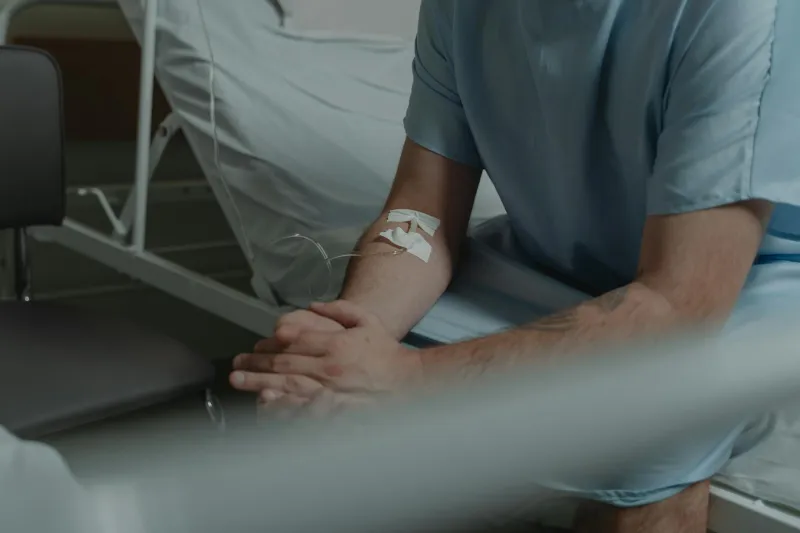
It's 9:47am on a Sunday in Manchester, and Jake Morrison is lying on a medical bed having a bag of saline solution pumped directly into his bloodstream. Around him, six other twenty-somethings are receiving similar treatment, all sporting the telltale signs of Saturday night excess: sunglasses indoors, slow movements, and the kind of regret that only comes from ordering tequila shots at 2am.
Welcome to 'Revive & Thrive', one of dozens of IV hangover clinics that have sprouted across British cities, turning our national talent for getting absolutely steaming into a legitimate medical service industry.
From Misery to Money
The numbers are staggering. Britain's 'hangover economy' – encompassing everything from specialised food delivery to luxury recovery services – is now worth an estimated £1.2 billion annually. That's more than the entire UK craft beer market, and it's growing at a rate that would make tech startups weep with envy.
Dr. Sarah Chen, who opened London's first hangover clinic in Shoreditch three years ago, stumbled into the business almost by accident. "I was working A&E shifts and noticed how many people came in on Sunday mornings just needing rehydration," she explains, preparing another IV drip. "They weren't ill – they were just catastrophically dehydrated and looking for a quick fix."
Her clinic now treats over 300 customers weekly, charging £89 for a basic 'Revival' package that includes IV fluids, vitamins, and anti-nausea medication. The premium 'Phoenix Rising' treatment – complete with oxygen therapy and a vitamin B12 injection – costs £149 and books out weeks in advance.
The Delivery Revolution
While medical interventions grab headlines, the real money lies in delivery services that have turned Sunday morning desperation into a logistical masterpiece. Apps like 'Hangover Helper' and 'Sunday Saviour' promise salvation within 30 minutes, delivering carefully curated recovery packages that would make pharmaceutical companies jealous.
Tom Bradley, founder of 'Hangover Helper', started the company after a particularly brutal Sunday morning in Leeds. "I was lying on my bathroom floor, desperately googling 'hangover cures', and realised there was no service that delivered exactly what you needed in that moment," he recalls.
His app now operates across 15 British cities, delivering over 2,000 orders weekly. The 'Full English Recovery' bundle – containing electrolyte drinks, paracetamol, energy gels, greasy breakfast, and a bottle of Irn-Bru – costs £24.99 and typically arrives faster than an Uber.
"We've gamified recovery," Bradley explains, showing off the app's features. "Users can track their hangover severity, get personalised recommendations, and even pre-order their Sunday salvation while they're still out on Saturday night."
The Science of Suffering
Behind the commercial success lies genuine scientific innovation. Companies are investing serious money into understanding exactly how alcohol affects the British body, and how to reverse those effects as efficiently as possible.
Dr. Michael Roberts, who runs the 'Hangover Research Institute' from a converted warehouse in Birmingham, has spent five years studying the specific ways British drinking culture creates unique recovery challenges.
"British hangover patterns are different from anywhere else in the world," he explains, surrounded by charts showing alcohol consumption data. "We drink faster, we mix more types of alcohol, and we eat terrible food while doing it. Traditional hangover advice doesn't work for someone who's had six pints, three shots, a kebab, and four hours of sleep."
His research has led to the development of 'targeted recovery compounds' that address specific British drinking behaviours. The results are being licensed to major pharmaceutical companies, turning academic research into commercial gold.
The Brunch Arms Race
Meanwhile, restaurants and cafes have transformed the traditional 'full English' into a sophisticated hangover-fighting machine. Venues like 'The Remedy' in Edinburgh and 'Hair of the Dog' in Brighton offer medically-inspired brunch menus designed by nutritionists and former medical professionals.
'The Cure' – a £18 breakfast featuring specific ratios of protein, carbohydrates, and electrolytes – has become the most Instagrammed brunch in Britain. Customers regularly queue for over an hour to eat what's essentially a scientifically optimised fry-up.
"We're not just feeding hangovers anymore," explains head chef Maria Santos, who trained as a biochemist before switching to catering. "We're providing targeted nutritional therapy that happens to taste like the best breakfast you've ever had."
The venue's 'Detox & Retox' bottomless brunch – where recovery cocktails gradually transition into hair-of-the-dog drinks – has spawned copycat concepts across the country.
The Subscription Economy
Perhaps most impressively, some entrepreneurs have convinced Brits to pay monthly subscriptions for hangover prevention. 'Prep Club' sends personalised supplement packages based on users' drinking patterns and recovery history.
"We analyse your social media, track your location data, and use machine learning to predict when you'll need recovery support," explains founder Jessica Walsh. "Our algorithm knows you're going to be hungover before you do."
The service has 12,000 subscribers paying £29.99 monthly for supplements, recovery drinks, and emergency delivery credits. Premium members get access to 24/7 hangover hotlines staffed by qualified nurses.
The Luxury End
At the premium end of the market, services like 'Hangover Concierge' offer in-home recovery experiences that border on the absurd. For £299, a qualified medical professional will visit your home, administer IV therapy, provide massage, and even clean up evidence of the previous night's chaos.
"Our typical client is someone who earns good money but values their time more than anything else," explains founder David Kumar. "They can't afford to lose an entire Sunday to a hangover, so they pay us to fix the problem professionally."
The service has expanded to include 'preventative packages' where medics attend private parties to provide real-time hydration and vitamin injections throughout the evening.
The Social Media Factor
Instagram has become crucial to the hangover industry's success, with recovery experiences becoming as shareable as the nights that preceded them. Clinics design photogenic treatment rooms, delivery services include Instagram-worthy packaging, and brunch venues create hangover dishes that look better than most restaurant meals.
"Recovery has become aspirational," observes social media analyst Rebecca Thompson. "People share their hangover treatments like luxury purchases. It's become a status symbol to afford professional recovery."
The Psychology of Payment
Dr. Lisa Park, a behavioural economist at Cambridge, has studied why Brits willingly pay premium prices for hangover services when cheaper alternatives exist.
"There's a psychological component where paying more for recovery feels like penance for overindulgence," she explains. "The higher the price, the more effective people believe the treatment will be. It's guilt monetised."
Her research shows that people rate identical recovery treatments as more effective when they cost more, suggesting the industry's premium pricing actually enhances perceived value.
The Future of Feeling Better
As the industry matures, innovation continues accelerating. Wearable devices that monitor alcohol levels and automatically order recovery services are in development. Virtual reality hangover therapy sessions are being trialled. Some companies are exploring genetic testing to create personalised recovery protocols.
"We're moving towards a world where hangovers become completely optional," predicts industry consultant Mark Stevens. "The technology exists to prevent, monitor, and treat alcohol's effects in real-time. The question is how much people are willing to pay for that convenience."
The answer, based on current growth trends, appears to be: quite a lot.
As Jake Morrison finishes his IV treatment in Manchester, feeling remarkably human for someone who consumed his own bodyweight in alcohol twelve hours earlier, he's already booking next weekend's session. The hangover economy has created its own cycle of dependency – not on alcohol, but on the promise that every night of excess can be professionally erased by Sunday afternoon.
In a country that's elevated drinking to an art form, perhaps it's only natural that we've done the same with recovery. The morning after has become just another service industry, and business is booming.