Names on the List: Decoding Britain's Most Brutal Nightlife Pecking Order
The Theatre of Rejection
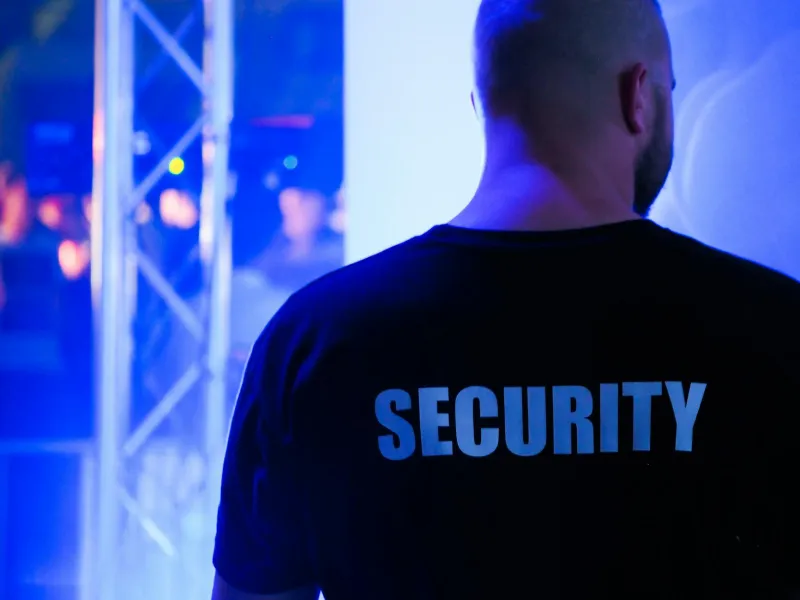
You've done everything right. Pre-drinks were perfectly timed, your outfit cost more than most people's rent, and crucially – crucially – your name is on the list. Yet here you stand, watching lesser mortals waltz past the velvet rope while you're left explaining to increasingly bored door staff why you definitely, absolutely should be allowed in.
Welcome to the brutal reality of Britain's guest list culture, where social hierarchy is enforced with clipboards, earpieces, and the casual cruelty of a well-timed 'Sorry mate, not tonight.'
The Invisible Caste System
Every major city has them – those venues where getting in isn't about queue position or even having tickets, but about occupying the right rung on an invisible social ladder that nobody admits exists but everyone understands.
In London, it might be Chiltern Firehouse or The Box. Manchester has its own temples of exclusivity, as does Birmingham, Leeds, and every other city with pretensions to sophistication. The names change, but the game remains the same: making people feel special by making others feel excluded.
"It's not about the money," insists James Crawford, a promoter who's worked with several high-end London venues. "Rich people are ten a penny. It's about curating an experience, creating an atmosphere. That requires... editorial decisions."
Editorial decisions. That's one way to describe the systematic exclusion of people based on arbitrary criteria that shift like quicksand.
The Plus-One Power Play
Nothing reveals the guest list hierarchy quite like the plus-one negotiation. Your name might be down, but can you bring your mate from uni? Your girlfriend? Your girlfriend's sister who's visiting from Glasgow?
The answer often depends less on capacity than on social mathematics that would make Stephen Hawking weep. Are you important enough to extend your social radius? Does your plus-one enhance or diminish the venue's carefully cultivated image?
"I once saw someone get told their plus-one was fine, then get knocked back when the plus-one turned out to be their boyfriend," recalls Sophie, a regular on the East London scene. "Apparently, two men together didn't fit the 'vibe' they were going for. Disgusting, but revealing about how these places really operate."
The Promoter's Dilemma
From the other side of the rope, promoters paint themselves as curators of experience rather than arbiters of exclusion. They speak of 'energy management,' 'demographic balance,' and 'maintaining standards' – euphemisms for a complex web of prejudices, commercial pressures, and genuine crowd psychology.
"You can't just let everyone in," argues one promoter who requested anonymity. "Too many men and the women stop coming. Too many tourists and the locals boycott. Too many of the wrong type of people and your reputation is shot. It's not personal – it's business."
But it feels deeply personal when you're the one being turned away, especially when you can see people without reservations breezing past.
The Economics of Exclusivity
Guest lists aren't just about social engineering – they're about money. The most exclusive venues operate on a model where regular punters subsidise the beautiful people who create the atmosphere that attracts the regular punters who subsidise... you get the idea.
"The guest list is marketing," explains industry insider Rachel Torres. "You comp the influencers, the models, the minor celebrities – anyone whose presence makes other people want to be there. It's loss-leader economics applied to nightlife."
The result is a two-tier system where some people pay £20 for the privilege of subsidising others' free entry. The question is whether you're paying to get in, or paying to be seen getting in.
Digital Democracy vs Analogue Aristocracy
Social media has complicated the guest list game exponentially. Venues now scout Instagram followers as much as they do cheekbones, leading to the rise of the 'micro-influencer' – people with modest followings who nonetheless command VIP treatment based on their potential to generate buzz online.
"I've seen people get knocked back despite having 50,000 Instagram followers, then watched someone with 500 followers walk straight in," notes digital marketing consultant Alex Kim. "It's not about numbers anymore – it's about the right kind of engagement with the right kind of audience."
Meanwhile, apps like Resy and OpenTable have democratised restaurant bookings, but nightlife remains stubbornly analogue in its exclusivity mechanisms.
The Psychology of Rejection
Why do we subject ourselves to this ritual humiliation? Psychologists point to the scarcity principle – we value what's hard to obtain – and social proof – we want to be where other desirable people are.
"Being rejected from an exclusive venue actually increases its desirability," explains Dr. Sarah Mitchell, who studies social behaviour. "It confirms the venue's status while making eventual entry feel like a genuine achievement."
The flip side is the genuine psychological impact of public rejection, especially when it seems arbitrary or discriminatory.
When the System Breaks Down
The most revealing moments come when the guest list system malfunctions. Names go missing from lists, door staff misunderstand instructions, or venues oversell their capacity. Suddenly, the careful hierarchy collapses into chaos, revealing the arbitrary nature of the entire enterprise.
"I once watched a Premier League footballer get turned away because his name was spelled wrong on the list," laughs Tom, a former door manager. "Meanwhile, some random person with a similar name got waved straight through. The look on his face was priceless."
The Northern Resistance
Interestingly, cities outside London often resist the more extreme forms of guest list culture. Manchester's legendary democratic spirit extends to its nightlife, while Glasgow's venues pride themselves on accessibility over exclusivity.
"Down south they make you jump through hoops just to spend your money," observes Mancunian clubber David Walsh. "Up here, if you've got the cash and you're not being a knobhead, you're in. Much more civilised, if you ask me."
The Future of the List
As younger generations increasingly value authenticity over exclusivity, some venues are reconsidering their door policies. The rise of alternative spaces, pop-up events, and underground parties offers refuge from the guest list tyranny.
But don't expect the velvet rope to disappear anytime soon. As long as humans crave status and belonging, there will always be venues willing to weaponise both for commercial gain.
"The guest list isn't going anywhere," predicts industry veteran Marcus Thompson. "It might evolve, become more sophisticated or more subtle, but the fundamental dynamic – creating desire through exclusion – that's eternal."
So the next time you're standing outside a venue, watching your social standing get assessed by someone with a clipboard and an attitude, remember: you're not just trying to get into a party. You're participating in one of Britain's most enduring social rituals – the gentle art of making people feel small so others can feel big.
The only question is which side of the rope you want to be on.